Transhuman Kickstarter!

May 10th, 2013 § 0 comments § permalink

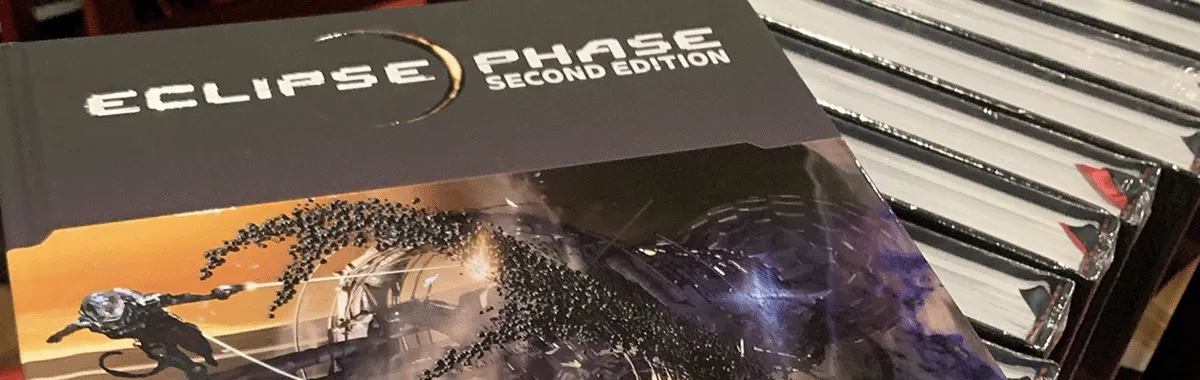
I’ve been remiss in not posting here about the Transhuman Kickstarter, which is currently running!

Unlike other Kickstarters I’ve talked about here, this one is being run by my company, Posthuman Studios. We quickly funded at the level we needed to print the book ($14,000), and we’ve been working our way through additional stretch goals since then. We’ve added some new projects to our schedule as a result of the campaign, and we’re also paying our Transhuman freelancers a 15% bonus as a result of the Kickstarter’s success!

We have some more sweet things to come that we’ll be announcing early next week, so please check it out! The support so far has been amazing and humbling.

Transhuman kickstarter

Kickstarter, Freeport, and Real Costs

March 28th, 2013 § 0 comments § permalink

My friends at Green Ronin are currently running a Kickstarter to fund a new Pathfinder-compatible edition of Freeport: The City of Adventure. They are into the last week of the Kickstarter project, and they are just under $10,000 away from their $50,000 goal. Ronin head Chris Pramas just made a very interesting post about their Kickstarter campaign.

When Kickstarter first launched, I hoped it would be a service that could help publishers be more transparent about their costs, including the often invisible fixed costs that running a publisher entails. This has turned out to be true only in very specific situations. Instead, many Kickstarter campaigns have moved to a model of setting a low “base goal” that satisfy’s Kickstarter’s requirements but does not actually fully fund the project, and stretch goals that push the dollar total higher to fully-fund the actual project. I’m not placing a value judgement on this (I’m working on a Kickstarter campaign that does the same thing), but it’s nice to see this level of transparency from Pramas and Green Ronin.

Their new Freeport book is ambitious, and Green Ronin is up-front about that. Instead of starting at a small book and building more into it with stretch goals, they’ve outlined exactly what they want to do, and they’re either going to do that book or not.

I’ve enjoyed both previous versions of Freeport, but have never actually played or ran a game of it. A new Pathfinder-compatible edition makes that more likely to happen, and it could well be the version of Freeport. That’s something that is well-worth having.

Take Your One Shot!

March 12th, 2013 § 0 comments § permalink

I’ve been on an unintentional hiatus from blogging, but intend to get back on track. Here’s a start: One Shot, by Tracy Barnett of Sand and Stream Productions has just been released! You can grab the PDF version or the PDF and Soundtrack together.

Tracy funded One Shot via Kickstarter last year and brought me on board to handle the graphic design. One Shot is a 24-page RPG for one player (“The Shooter”) and one GM (“The Forces”)—very different from most of the things I’ve spent the last 10+ years working on! It’s laser-focused on the concept of vengeance and the sacrifices that one must make to obtain it.

Oneshot cover

Leah Huete’s photography in this book deserves extra praise—photographs as RPG art has often been half-baked. Her work is a full, delicious, evocative meal. If One Shot were a typical 160 or 300 page RPG, using photographs as every piece of art would probably be cost-and-time prohibitive, but in this case it works perfectly.

If you want to check out the text of One Shot before buying the PDF, you can read the entire game here.

Kickstart Narosia: Sea of Tears, one of my upcoming projects!

August 8th, 2012 § 0 comments § permalink

One of my projects this fall is the HERO System fantasy game, Narosia: Sea of Tears. The Kickstarter launched on August 1st and closes on August 31st!

Narosia is a gritty fantasy RPG, designed by Shane Harsch of Legendsmiths and Marc Tassin, with artwork from Universe M, and contributions from Kenneth Hite. I’m especially excited because this is actually the first project where I’ll get to work with Ken!

I’m also excited about seeing what sort of new graphical takes I can do on a HERO System game, without alienating the diehard HERO fan base … I do suspect some samples will end up hitting this blog over the next couple months!

Narosia: Sea of Tears will be published by Silverback Press, the new publishing company run by ex-HERO Darren Watts. The core rulebook will be complete with HERO System rules and setting information, not requiring a distinct HERO System core rulebook to use!

2012 ENnies Voting

July 28th, 2012 § 0 comments § permalink

Voting for the 2012 ENnies Awards ends soon. One of the titles that I helped create, Panopticon, is up for an ENnie Award for Best Writing. Voting is open to the public, but it ends tomorrow. I (and the other Panopticon creators) would appreciate your support!

Posthuman Studios is also nominated in the Best Publisher category.

Affordable Interlocking Convention Floor Mats

July 19th, 2012 § 3 comments § permalink

This is one of those posts that I started last year … but I’m buying more today, so I’m throwing this post up as-is!

I’ve been shopping for interlocking convention mats over the last few days. These mats are also used in playschools and martial arts studios and all sorts of places. They’re a couple feet wide, they link together to form a complete floor, they come in a variety of colors … and if you’re going to spend hours a day standing in a trade show booth, you’ll understand why they’re worth well more than their weight!

The companies that sell “convention” fixtures really like making money. If something is a “convention” supply, it automatically costs more than the exact same thing sold to a different market. They thrive on customers who need something yesterday and on those that have marketing budgets that must be spent in full.

And if you have to rent convention supplies, you’re basically boned. Rentals often cost more than buying the same thing.

Back, specifically, to tiles. I have a 10′x10′ booth; it needs 25 2′x2′ tiles to cover it completely. Over time, the tiles will become damaged due to the weight of tables or other displays on them, and of course, you may lose a couple, spill a drink on them, or otherwise need to replace them. So while I was tempted to simply buy 96 square feet of tiles (they are typically sold in increments of 24 square feet) and hide the “empty” square, I instead decided to buy a few more than I needed.

Looking at a typical convention supplies site, the price per tile is $6.56, or just under $200 for 30 of them. I nosed around a few sites, and the price is pretty close to the same. Some of them charge shipping, some offer free shipping. Depending on where you are in the country and how you transport them to and from your convention, this will of course add extra costs on a per-use basis. So keep that in mind.

After browsing the convention-specific sites, I checked out Amazon, and sure enough, there are tons of vendors selling basically the exact same product—just aimed at people who want them for their home gym or kid’s playroom. I had to compromise on the colors (I wanted black tiles and red tiles) and ended up buying 120 square feet of red tiles from this vendor, a pack of 24 and a pack of 6. For a total of $103, after shipping costs.

Shop around, and look for deals that you can get by buying things early—slower shipping instead of overnighting things to the hotel to pick up the day of convention setup can save you money and stress.

Kickstart This: Feminist Speculative Fiction Anthology

May 24th, 2012 § 2 comments § permalink

When I landed in Chicago for a summer ten years ago, Jef Smith was one of the first people I met. He’s spent most of the past ten years working for Independent Publishers Group in that fine city, along with being an integral member of Chicago’s radical left reading group Think Galactic and their associated convention Think Galacticon. He’s now he’s working on publishing a Feminist Speculative Fiction Anthology, edited by Hugo Award winner Ann VanderMeer and World Fantasy Award winner Jeff VanderMeer.

Like many independent projects these days, Jef is using Kickstarter to fund it, and with six days to go is only about $800 away from this goal of $12,000. A simple kick in of $15 gets you the electronic edition of the book, and $25 earns you both electronic and print. Higher backer levels are available, including a fabulous one where Jef adopts a new cat or dog and names it after your favourite feminist!

Depending on my schedule, I might be involved in the production of this project, or I might not—but either way, I backed it and I look forward to seeing and reading it!

Dwimmermount Preview and Kickstarter!

April 13th, 2012 § 2 comments § permalink

It’s going to be the most elegant and epic heavy metal dungeon crawl ever, isn’t it? It’s like a 3-hour Kirk Hammett guitar solo sending the party to war with the power of a hundred bards!1 Hell yes!

Several years ago I sent James Maliszewski the above, as I asked him if I could work on the eventual publication of Dwimmermount, his long in-progress megadungeon campaign.

And now that’s reality. James is working with the folks at Autarch, creators of Adventurer Conqueror King, to run the Kickstarter campaign and project manage Dwimmermount.

We are late into the Kickstarter campaign; it ends on Saturday, April 14th. And the campaign has reached the initial funding goal and three bonus goals, but we’d be very happy for more funding in these last few hours so we can push to make the book even better!

We’re still tweaking the graphic design of the book (most notably, some icons to help convey info in the sidebar), but here’s a two page preview of Level 1: The Path of Mavors. James has also posted a different preview of the same chapter on Grognardia. Check them out, let us know what you think, and remember: the Dwimmermount Kickstarter finishes on Saturday the 14th of April! As I post this, 30 hours to go!

1. I am not one of those “Heavy Metal is the music of D&D” guys … but neither is James, so that made it funny to me. To me.

Shadowrun Returns

April 5th, 2012 § 4 comments § permalink

A long time ago, the SEGA Genesis version of Shadowrun introduced me to the Sixth World. A few weeks later, my pay for babysitting my young nephew was a copy of Shadowrun, Second Edition. Good games, bad games, fandom, fanzines, being published, working for the publishers, and the 20th Anniversary Edition all followed. My nephew is nineteen years old now. The Sixth World has been dear to my heart for a long time.

I wouldn’t be here, doing what I do, without Shadowrun. As I once said to Jim Nelson: “I blame you.”

And now, Shadowrun is returning to the computer/video gaming world, with Shadowrun Returns from Jordan Weismann’s Harebrained Schemes. And I’d be remiss to say that this is really, really awesome. In just over a day, the Kickstarter project has been fully-funded, and it will surely go much higher with 23 days to go.

Harebrained’s approach is interesting: they’re rolling back the setting to 2050 and moving on from there. On an initial level, that kind of hurts—my work on Shadowrun appears to be in no way integrated into what they want to do. But on logical reflection, I’m fine with that. I think rolling back the world to 2050 gives Harebrained tons of room to tell stories that weave in-and-out of the existing metaplot that Shadowrun fans are familiar with. And on the personal side, I fell in love with that 2053 datajacks-and-rockers Shadowrun, so playing through a computer game set in it appeals to my tastes as well. I know I have some fresh stories to tell in the setting.

A fresh start for a game in a completely different medium sounds like a good move to me. Keep it familiar to old fans and accessible to new ones, and take the best of the existing canon material while sliding the rest under the rug.

What great news for Shadowrun fans, and what an amazing show of support by them!

Creating Playtest Kits for Card Games

January 31st, 2012 § 0 comments § permalink

I started this article a long time ago and it’s sat in my drafts folder for months. I’m working on the same task today and figured I would finish what I had written about the subject and get it out there, instead of waiting until I could finish everything I want to write on the subject.

I’m working on playtest kits for some card games right now. It’s not my first time doing so, but I think it’s my smartest time. Here’s some notes on how to build playtest kits more easily.

What are the goal of playtest kits? Playtesting the game, of course! You want to spend as much time as possible playing and analyzing that play, and less time building and rebuilding kits.Here’s some priorities when breaking that down:

Playtest kits should be:

  1. As easy to make as possible.
  2. Quick to modify on the fly.
  3. An accurate representation of the current state of the game rules and all card text.
  4. A factual representation of the physical game item (correct colors, rough icons, etc.)

Here’s the game-specific stuff you need to build a playtest kit:

  1. A spreadsheet or database that contains all the necessary information for each card.
  2. A list of how many of each card you need to print.
  3. Printable cards, 9 per page. There are a million ways to turn your spreadsheet/database into a printable page like this. As you can probably guess, I use InDesign for this. Data merge is hot!
  4. A copy of the rules to be printed. These rules should be in a state where a group of people who have never played the game can lean the game from them.

Here’s the stuff you’ll need from your Game Designer’s Toolkit:

A whole bunch of excess cards from dead CCGs. Go to your local game store and say “Hey, I need a 800-count box of the absolute worst, dead, totally terrible CCG cards you can get me, from a variety of terrible CCGs.” Your game store clerk will say “Are you serious?” and you say “Yup! What do you want for them?” You should be able to get this box of cards for 10 bucks or less—many game stores have boxes of these cards that haven’t sold in years. If the store offers to sell you more and you have the storage space, go for it. You want the games from a variety of CCGs to make your different playtest sets easier to tell apart if you use clear sleeves.

A smaller bunch of CCG sleeves. There are two routes to take with this: the cheap clear sleeves that Ultra Pro sells for a penny each, or the nicer colored/opaque/textured sleeves that typically run about 5 cents each, retail. Advantages to the penny sleeves: they are cheap and you can use different CCG cards in them to easily distinguish between different types of cards in your game. Advantages to the more expensive sleeves: they typically shuffle better, slide around less, and can take more wear and tear. I prefer the Ultra Pro matte sleeves, as they’re quite durable and don’t get marked very easily. You’ll need a few different colored types of sleeves to distinguish between different types of cards (or different games, or different versions of games.) If you want the nicer sleeves but are on a budget, ask your local game store to sell you all the sleeves that, for whatever reason, have not sold well to the local player community. If you’re willing to take those slow-moving sleeves off their hands, they may well cut you a bargain. They might also have a bunch of used sleeves that they’ll sell to you cheaply—many people who sell off their CCG collections leave the cards sleeved, and so stores end up with boxes of these used sleeves (if they don’t just throw them away.)

Cheap printer paper. This paper will be going inside a sleeve and against a card, so it doesn’t need to be sturdy. I think I paid $16 for 2500 sheets last time I bought paper: if each of those sheets turned into 9 playtest cards, that’s 22,500 playtest cards you can build before you need more paper.

A printer. I have a HP 2605dn color laserjet. Being able to do color is very useful in playtesting, and the cost savings over time for a laserjet printer are very clear over an inkjet.

A paper cutter or scissors. You’re going to be cutting a bunch of paper, and a proper paper cutter will make your life better. A paper shredder for all those scraps is great too, if you’re not a recycler.

A bunch of counters. Most games require counters of some sort, for life or other resources. During playtests, poker chips usually do a great job of this. If you’re getting fancy, print out graphics and glue them to both sides of a poker chip.

Sharpies in a couple different colors for annotating cards during play or between sessions. Reprint them when the annotations become more confusing than the lack of them!

Print all the cards, cut them out, fill every sleeve with a CCG card, and then add the paper cards. Double-check the proxies with your list of cards, and you’re good to go!

One final word on organizing this stuff: make sure all of your playtest files have dates on them, and keep all the physical components in a single bag/box/container, with a list of everything that should be in it and the playtest kit date/revision number. There are some large deck storage boxes designed for Magic: The Gathering that are big enough to fit 100+ cards and some other components, or you can simply use the smaller white 400-count card storage boxes.

This may seem like a lot of stuff to buy and have kicking around, but you can get it all for under $50, and most of it is reusable!